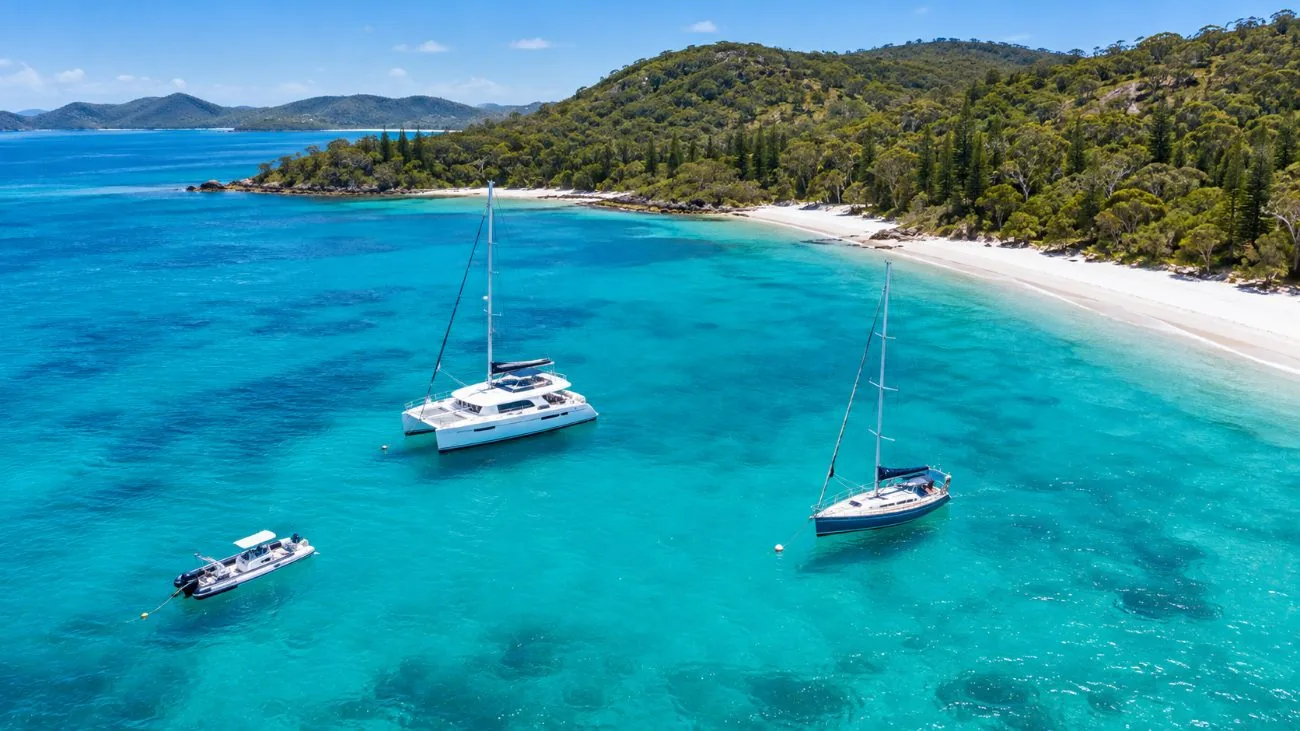
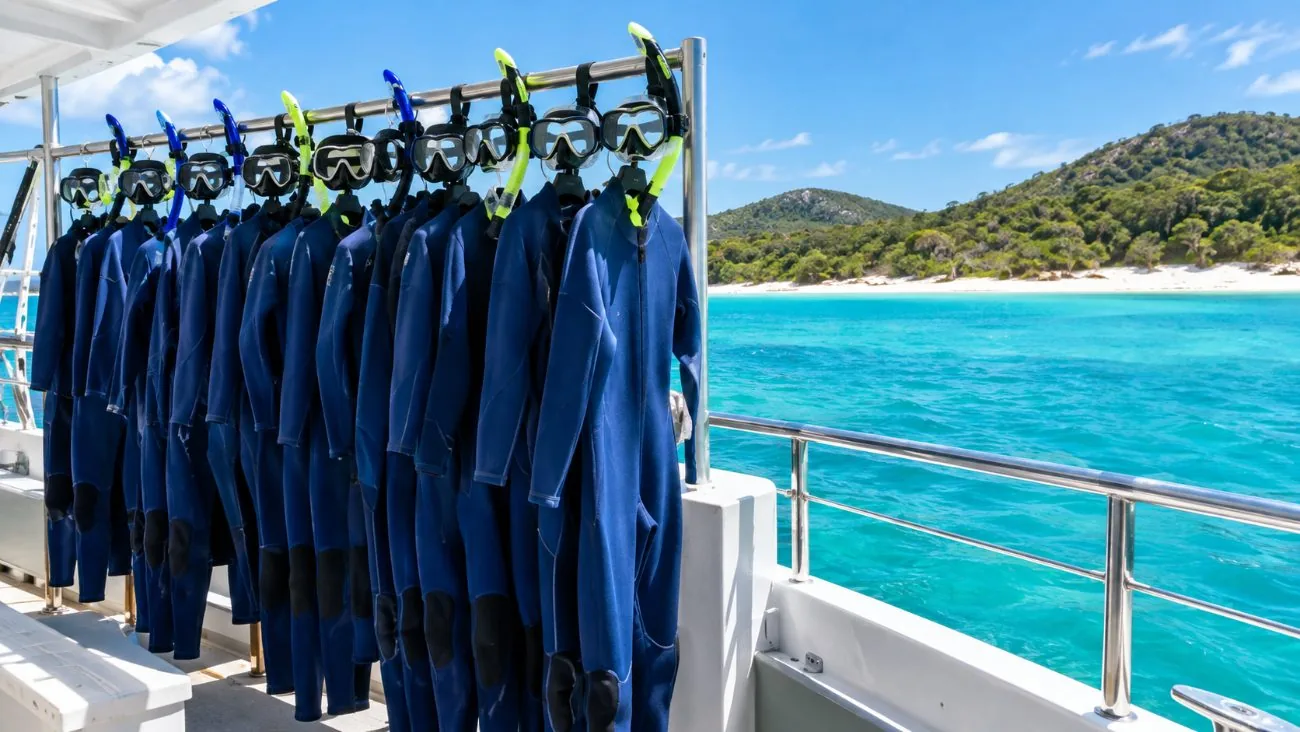
Booking choice: The Thundercat eco-cruise, from $174 per person. Check dates Tour details
Swimming in the Whitsundays is safe for most people on most days. Tour crews brief every group, hand out stinger suits and choose sheltered spots. The risks are real, though, and they are local: marine stingers in the warm months, crocodiles that sometimes turn up on the coast, sharks in a few anchorages, and a sun strong enough to burn you in winter.
Here is what each risk means in practice, what the official sources say, and where you can swim with none of them.
The quick answer
Wear a full-body stinger suit for every swim in the sea, all year: stings are most common from November to May, and stinger nets do not stop Irukandji. Treat a sting with vinegar and call 000. Respect every crocodile and shark sign, and never swim in Cid Harbour, a designated no-swimming zone. For a swim with no stingers at all, the Airlie Beach Lagoon is free and patrolled by lifeguards.
Is it safe to swim in the Whitsundays?
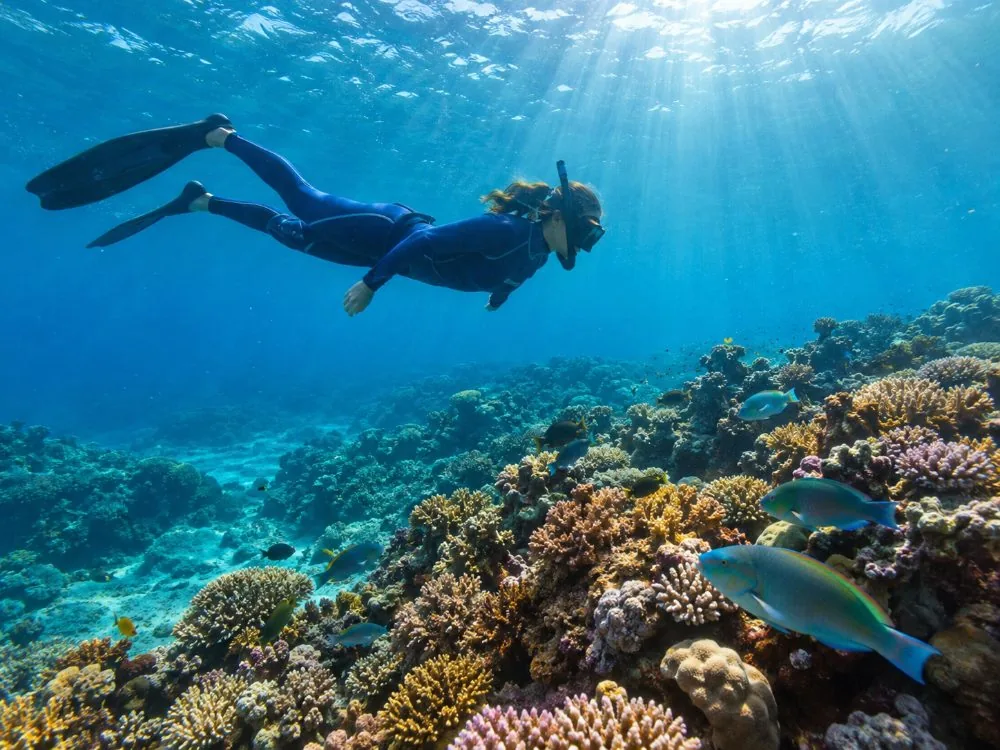
Yes, if you swim with a stinger suit, with your tour crew or at a patrolled pool, and follow the signs. The main risks are marine stingers, then crocodiles and sharks in specific places.
How the risk changes from place to place:
| Where | Stingers | Crocodiles | Sharks | What to do |
|---|---|---|---|---|
| Airlie Beach Lagoon | None | None | None | Swim freely; lifeguards on duty |
| Whitehaven Beach | Possible all year | QPWS warning signs | QPWS warning signs | Stinger suit; stay near the group |
| Snorkel stops on tours | Possible all year | Rare | Possible | Suit, buddy, follow the crew |
| Island beaches | Possible all year | QPWS warning signs at campsites | Possible | Suit; no swimming at dusk or night |
| Airlie Beach foreshore | Possible all year | Sightings reported | Possible | Use the lagoon instead |
| Cid Harbour | Possible | Possible | No-swimming zone | Do not swim |
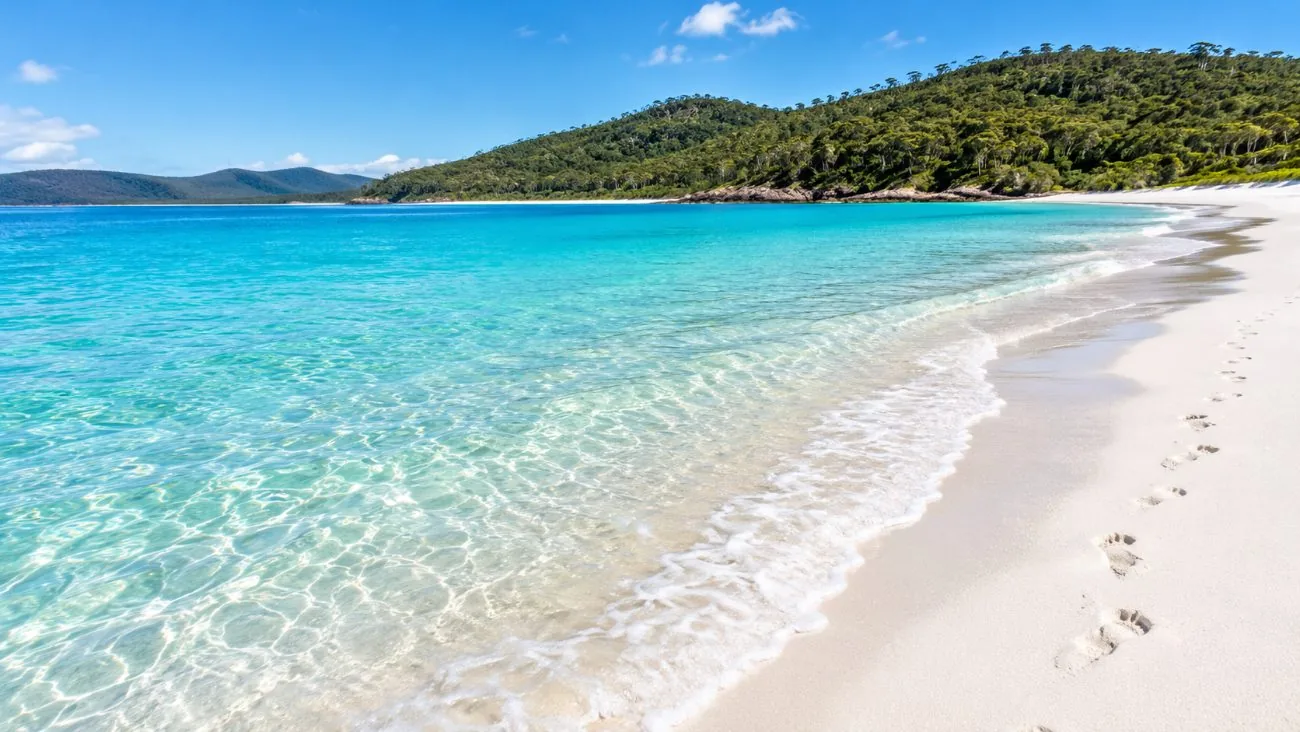
The warnings on the beach are official. The QPWS page for the Whitehaven Beach day-use area lists three: beware crocodiles, beware marine stingers, beware sharks. They don't mean the beach is dangerous. They mean wild water, and they apply to every island in the park.
Two snorkel stops, the Hill Inlet walk and lunch at Whitehaven, with stinger suits handed out in summer.
Check dates for the Thundercat eco-cruiseWhen is stinger season, and do stinger suits work?
Stings happen all year but are most common from November to May. A full-body lycra or neoprene suit is the best protection, and tour boats lend them for free.
The Whitsunday Regional Council calls November to May the peak season. Cruise Whitsundays puts the higher-risk window at October to May. Two kinds of jellyfish matter:
- Box jellyfish (Chironex fleckeri): up to 60 tentacles, each up to 3 m long. In the council's words, it is often regarded as the most venomous animal on the planet, and it can kill a healthy adult in 2 to 3 minutes.
- Irukandji: much smaller than box jellyfish. 14 species are known, and only a few could occur around the Whitsundays. The sting can feel mild; symptoms follow 5 to 45 minutes later.
A stinger suit covers up to 75% of the body, and the council says to wear one even when wading. Tour boats lend them; on Cruise Whitsundays' Whitehaven and reef trips they are free. Some beaches in Queensland have stinger nets. These stop box jellyfish, but the much smaller Irukandji can pass through. The 2026-27 stinger and cyclone season post has this season's dates.
Are there box jellyfish at Hamilton Island?
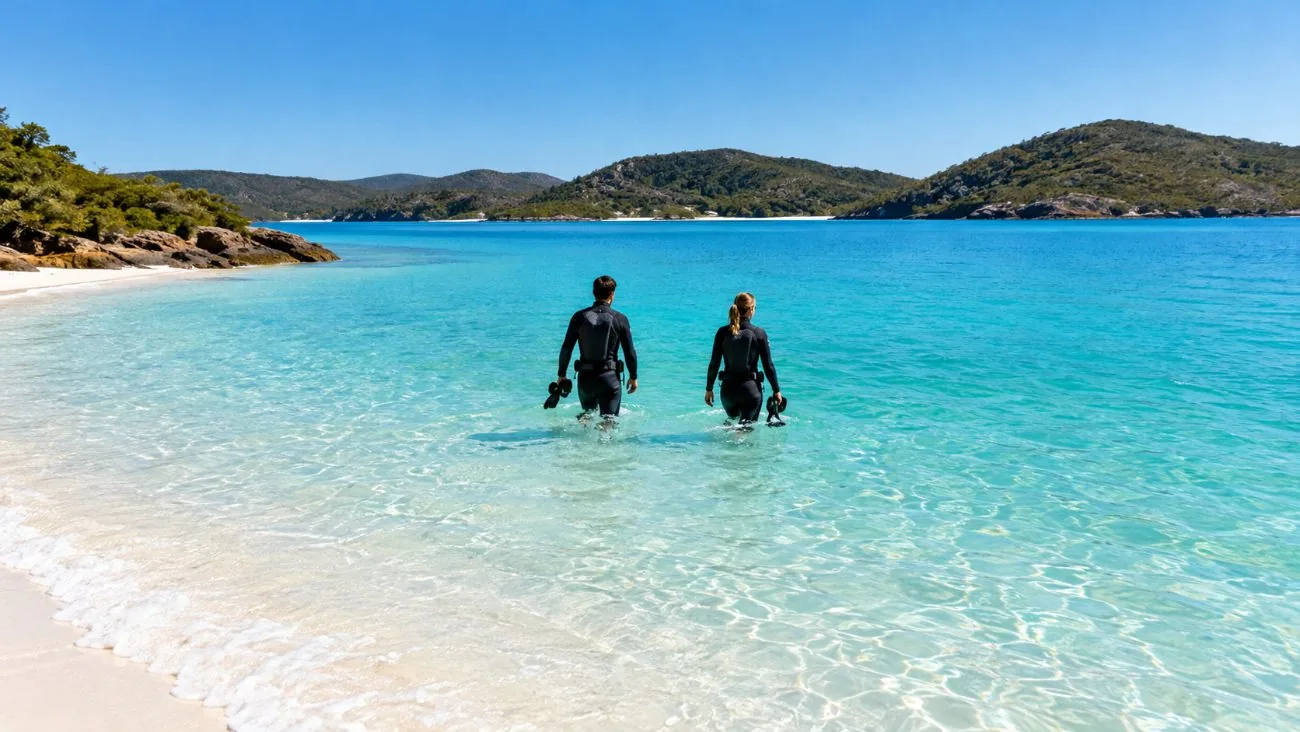
Yes, stingers occur around Hamilton Island like the rest of the Whitsundays. The resort's own advice is to wear a stinger suit in the sea, and suits are for hire on Catseye Beach.
Hamilton Island says the Whitsundays see more Irukandji in the warm summer months, and recommends a stinger suit for swimming at its secluded beaches. On Catseye Beach, staff advise on conditions, and suits are for hire at the Beach Sports Hut. Stings are not limited to summer: in August 2023 a woman was treated for a suspected sting on Hamilton Island, and the local paper reported 13 confirmed Irukandji stings in the Whitsundays that season.
The island's pools are an option for anyone who would rather skip the sea; the resort notes they have no lifeguard.
What should you do if someone is stung?
Call 000, start CPR if the person stops breathing, and pour vinegar on the sting. If you are unsure what stung them, treat it as Irukandji.
The council's first-aid steps, in order:
- Get help: call 000 (on a tour, alert the crew at once; boats carry first-aid kits and vinegar).
- Check breathing: start CPR if needed.
- Vinegar: douse the sting site as soon as possible. Vinegar stops the stinging cells from firing more venom.
- Stay calm: keep the person out of the water. The council says to wait at least 45 minutes before anyone goes back in.
Irukandji symptoms can appear 5 to 45 minutes after a sting that hardly hurt. Get medical help if they do.
Are there saltwater crocodiles in the Whitsundays?
Yes, sometimes. Sightings are occasional, but QPWS posts crocodile warnings at Whitehaven and the island campsites, and large crocodiles have been seen near Airlie Beach.
In September 2023 the Queensland environment department reported large crocodile sightings around the Airlie Beach marinas and Shute Harbour. In 2024 a 2.5 m male crocodile seen around Hook and Hayman islands was found in Nara Inlet and removed.
The official advice, from the Be CrocWise campaign, is short:
- Expect crocodiles in all waterways, even where there is no sign.
- Crocodiles swim in the ocean too; take extra care near water at night.
- Never leave food, fish scraps or bait near the water or at campsites.
Day trippers rarely need to think further than this. Swim where the crew says, in daylight, and stay out of creek mouths and mangroves.
What happened in Cid Harbour, and where can you not swim?
Cid Harbour, on the west side of Whitsunday Island, saw three shark bites in 2018, one of them fatal. It is now a designated no-swimming zone.
In September 2018 a 46-year-old woman and a 12-year-old girl were badly injured on consecutive days while swimming from yachts anchored in Cid Harbour. In November 2018 a 33-year-old man died after being bitten there (Al Jazeera). In October 2019 two young British men were seriously injured while snorkelling from a tour boat at Hook Passage (SBS News).
Queensland's SharkSmart program now lists Cid Harbour as a no-swimming zone. Some day boats, such as the Hill Inlet cruise, pass through it on the way north. A research program caught and tagged 57 sharks in Cid Harbour, mostly tiger, bull, hammerhead, blacktip, spot-tail and tawny nurse sharks (Queensland Government).
The SharkSmart tips that matter on a Whitsundays holiday:
- Swim with a buddy, in clear water.
- Avoid swimming from dusk to dawn.
- Stay away from anyone fishing or cleaning fish, and from bait or feeding activity.
- Avoid harbours, river mouths and steep drop-offs.
- Never throw food scraps off a boat.
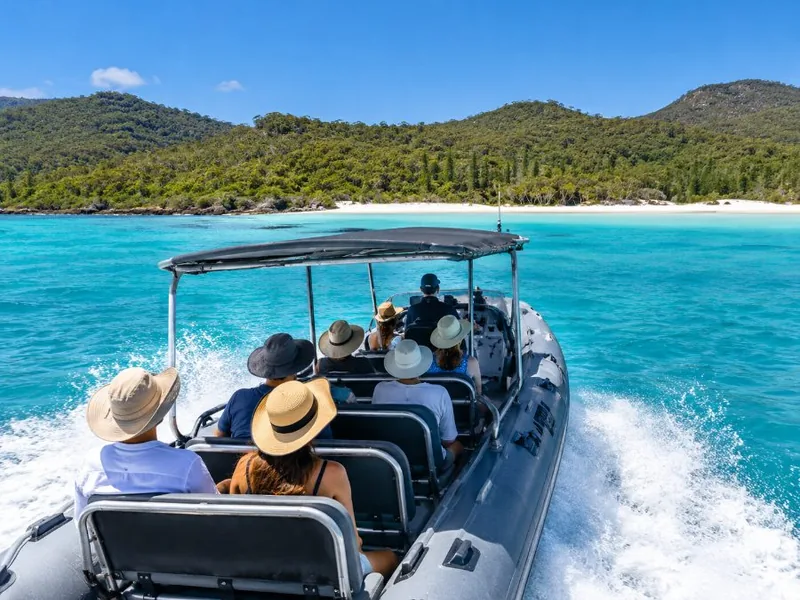
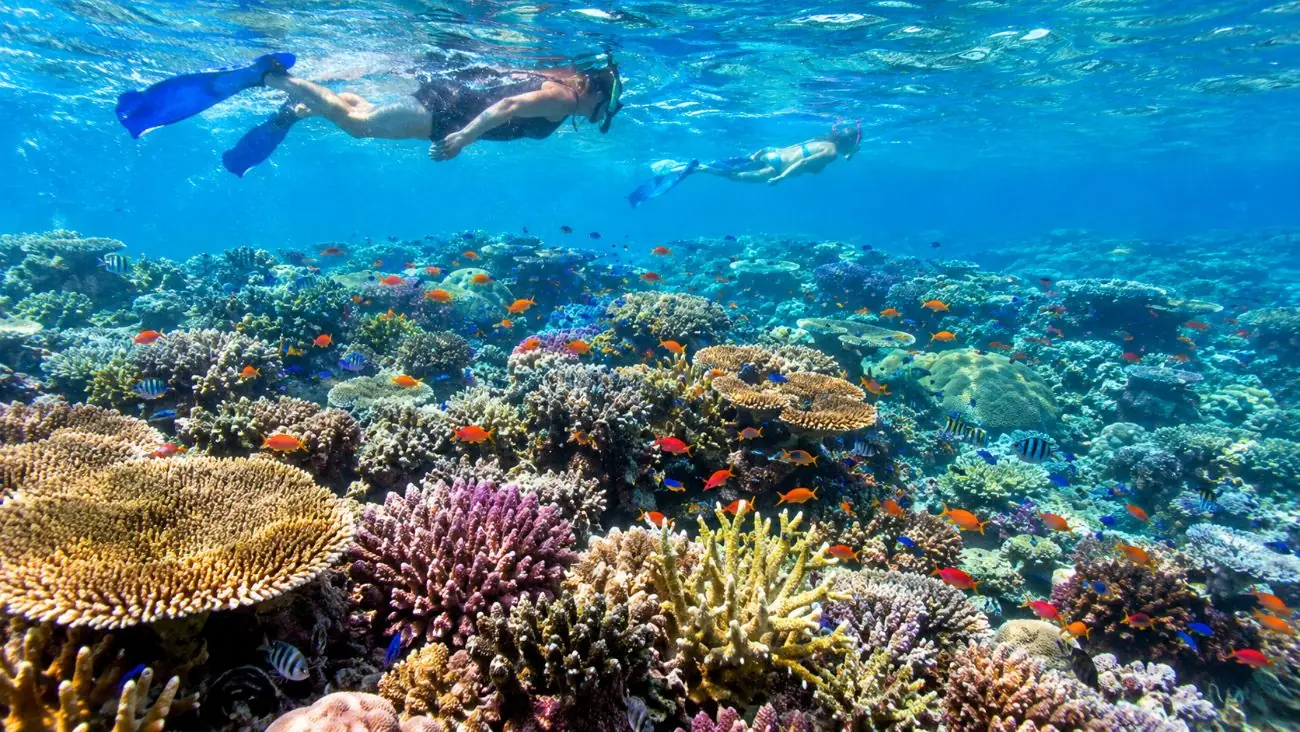
Snorkel with a guide: Ocean Rafting gives personal snorkel instruction at two reef sites, and the crew picks the spot.
Explore the Ocean Rafting day Tour detailsDo great white sharks swim in the Great Barrier Reef?
They are not a typical Whitsundays shark. The reference work Fishes of Australia places their range on the Queensland coast from about Yeppoon, south of the Whitsundays, with records further north.
Fishes of Australia says white sharks are known on the Queensland coast from about Yeppoon, and even further north to Innisfail and reefs in the Coral Sea. The sharks tagged in Cid Harbour were tropical species: tiger, bull and others. No white sharks were among them.
Whatever the species, the advice is the same. Treat any shark with respect, leave the water calmly if the crew asks, and follow the SharkSmart tips above.
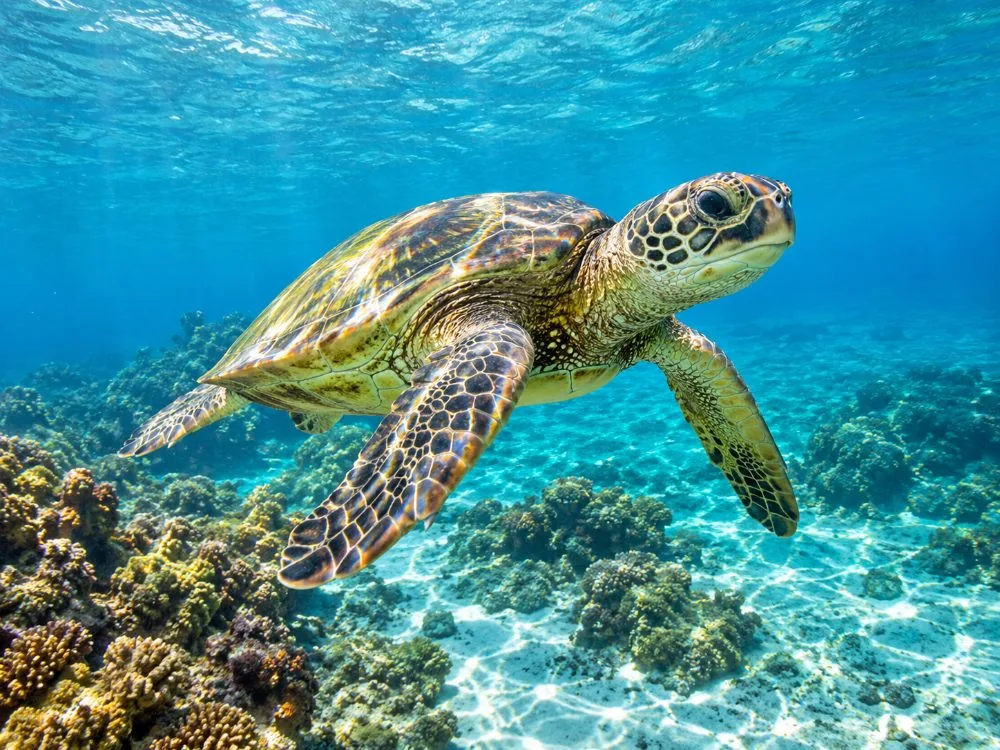
Where can you swim with no stingers near Airlie Beach?
At the Airlie Beach Lagoon: a free pool of fresh water on the foreshore, patrolled by lifeguards and, in the council's words, completely safe from stingers and marine wildlife all year.
The Whitsunday Regional Council runs the lagoon: 4,300 m², 4.5 million litres of fresh, chlorinated water, a toddler pool, a children's pool up to 1.5 m deep and a 2 m pool with lap lanes. Lifeguards patrol from 5:30 am to 6 pm from May to August and to 7 pm from September to April. Tourism Whitsundays lists entry as free, with lawns, barbecues, toilets and showers around it.
The other risk is overhead. Cancer Council Queensland says the UV index in Queensland is 3 or above all year round, the level at which you need protection. On a boat, the wind hides the burn. Wear a rash vest or the stinger suit, SPF30 or higher, a hat and sunglasses, and drink plenty of water.
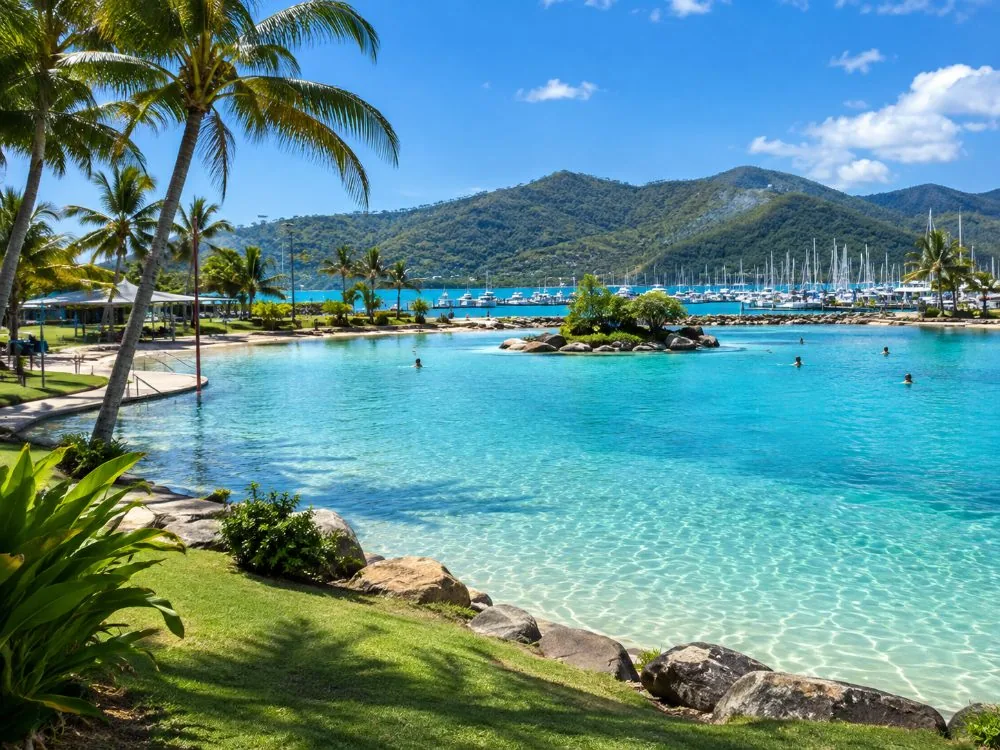
Personal snorkel instruction at two reef sites, and guests report a free wetsuit loan.
Check dates for the Ocean Rafting dayFrequently asked questions
Do Whitsundays tours provide stinger suits?
Yes. Cruise Whitsundays provides them free on its Whitehaven and reef trips, and the Thundercat and Lady Enid listings include them. Red Cat swaps them for wetsuits in winter.
Can you swim at Whitehaven Beach?
Yes. The water at the southern end is calm and shallow. Wear a stinger suit, as QPWS posts stinger, crocodile and shark warnings for the beach.
Is it safe to swim at Airlie Beach itself?
Use the lagoon. The open beach has stingers in season and occasional crocodile sightings; the lagoon is free, patrolled and stinger-free.
Do I need sunscreen in winter in the Whitsundays?
Yes. Cancer Council Queensland says the UV index in Queensland is 3 or above all year round, so cover up even in July.
Ready to book
Choose your tour
Free cancellation on every option, up to 24 hours or 2 days before depending on the operator. Prices are from-prices in USD and move with the season.
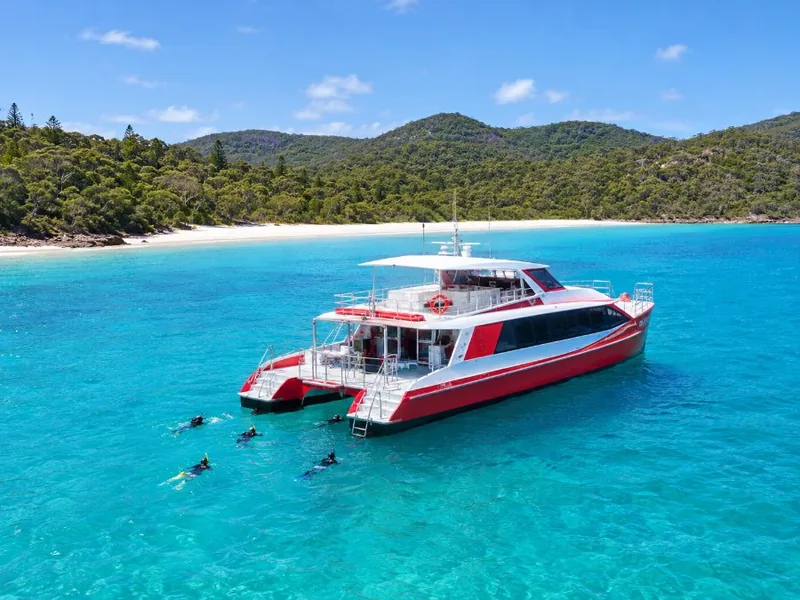
Red Cat Thundercat: Whitehaven Eco-Cruise
- Bus pickup and drop-off in Airlie Beach, Cannonvale and Jubilee Pocket
- Two snorkel stops, mask, snorkel and stinger suit or wetsuit
- Guided walk to the Hill Inlet lookout
Ocean Rafting: Snorkel, Hill Inlet & Whitehaven
- Guided national park walk to the Hill Inlet lookout (north option)
- Over an hour of snorkelling, gear and stinger suit
- Lunch on the beach, morning and afternoon tea
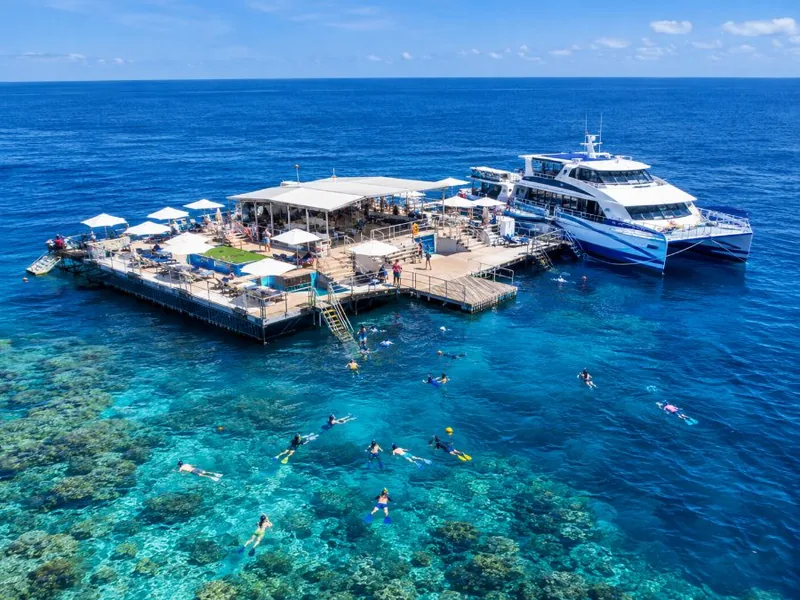
Great Barrier Reef Adventure Cruise
A pontoon on Hardy Reef, 39 nautical miles out. No Whitehaven